how-to
Evaluating Government Bid Source Depth: A Practical Guide
Editorial Team · 2026-11-20 · 12 min read

Last Updated: November 19, 2026
Quick Summary
Bid source depth measures how much of the public bidding landscape a source actually covers. To evaluate it, check which agencies, disciplines and delivery roles the source names, how quickly records refresh, and whether each notice links back to the issuing agency's own posting.
- Ask each source to name the agencies, states and disciplines it monitors, not just say nationwide.
- Verify each notice against the issuing agency's own procurement page before acting on it.
- Keep planning forecasts separate from open solicitations in your tracker.
- Score each candidate source 1 to 5 on coverage, completeness, traceability and status clarity.
- Log each review's scores and gaps so coverage can be compared quarter to quarter.
Table of Contents
- Why Bid Source Depth Decides What Your Pipeline Misses
- Criteria for Judging Whether a Bid Source Is Reliable
- Government Procurement Opportunity Sources: Primary, Secondary and Forecast
- Verifying a Bid Notice Against the Issuing Agency
- A Step-by-Step Scoring Rubric for Source Depth
- Comparing Public Works Bid Tracking Tools on Depth
- Setting Up Your Next Source Review
- Frequently Asked Questions
Why Bid Source Depth Decides What Your Pipeline Misses
Evaluating government bid source depth means judging how much of the public bidding landscape a source actually covers. A pipeline is only as complete as the sources feeding it. A source can look convenient and still miss the notices that matter most to your team.
Many business development teams check a handful of portals on Friday afternoons and assume they have seen everything. That habit leaves gaps.
Source depth matters because it answers three practical questions:
- Which agencies and jurisdictions does the source actually cover?
- Which disciplines and delivery roles are represented?
- How quickly does new information reach your team?
Federal procurement is large, and a shallow source can miss a meaningful share of relevant work without anyone noticing.
Criteria for Judging Whether a Bid Source Is Reliable
A reliable source is one you can describe precisely. Before trusting any feed, write down what it claims to cover and test those claims against records you can verify yourself.
Coverage by Agency, Region and Discipline
Coverage is the first thing to check. Ask the source to name the agencies, states and disciplines it monitors. Vague answers like "nationwide" or "all public work" are a warning sign.
Check coverage against your own pursuit map:
- List the three to five agencies that issue most of your target work.
- Confirm each one is named in the source's coverage disclosure.
- Confirm the disciplines you bid on, such as bridge engineering, utilities or surveying, are covered as well.
Coverage is disclosed by named source, state and discipline on the Project Signals markets page. An available state does not guarantee that every agency or discipline in it is covered, so verify the specific combination you need.
Update Frequency and Source Transparency
Speed and openness matter as much as breadth. A source that updates weekly will miss time-sensitive changes. Ask how often records refresh and whether it shows when each notice was last checked.
Transparency also means the source tells you where each record came from. If you cannot trace a notice back to its issuing agency, you cannot confirm its details. Reliable sources link each opportunity to official context, documents and deadlines.
Government Procurement Opportunity Sources: Primary, Secondary and Forecast
Not every public notice means the same thing, and treating them alike causes wasted effort.
- Primary sources are the issuing agency's own solicitations, such as an invitation for bids or a request for proposals posted on the agency's site.
- Secondary sources aggregate and republish primary notices. They save time but add a copy step, so confirm details against the original.
- Forecast or planning notices signal work the agency expects to procure later. They are not open solicitations.
Keep these categories separate in your tracker. A forecast may justify early relationship-building, but it does not carry a response deadline.
Also distinguish the prime contract from any subcontract scope inside it, and the agency's response deadline from a prime contractor's quote deadline. Each one can arrive on a different date.
Verifying a Bid Notice Against the Issuing Agency
Verification is the step that separates a useful source from a convenient one. Before you act on any notice, check it against the agency's own posting.
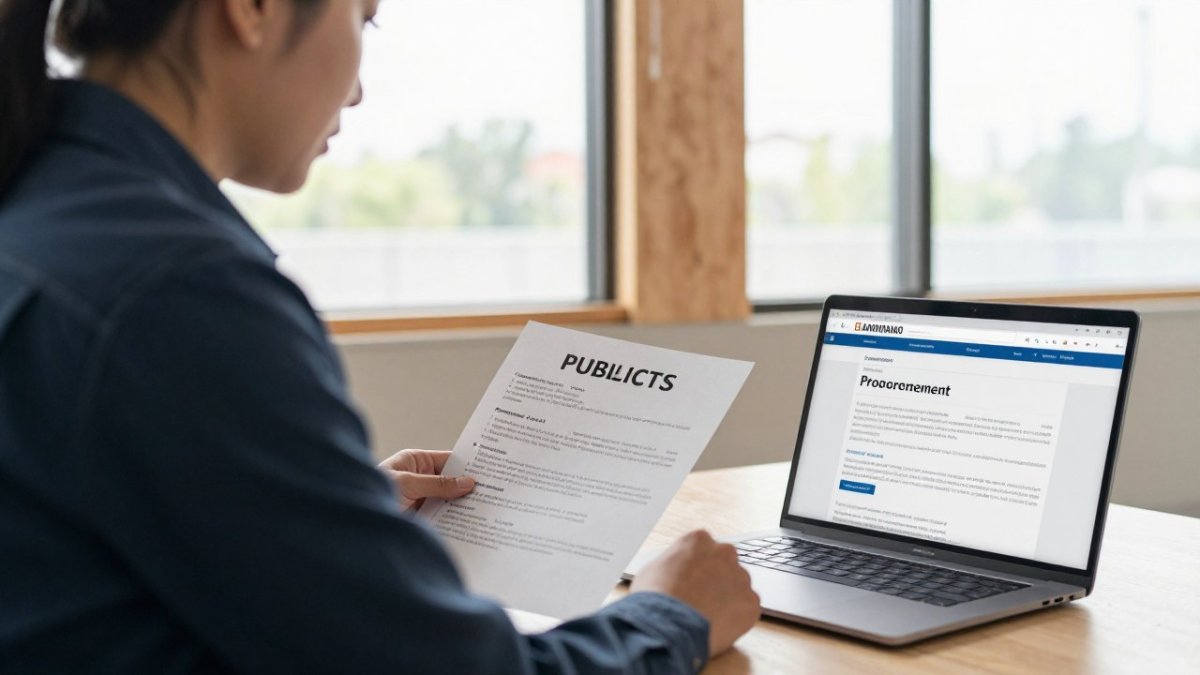
A business development manager at a small construction firm might work through it like this:
- Find the solicitation number on the aggregated notice.
- Search for the same number on the issuing agency's procurement site.
- Compare the scope, location, deadline and any listed addenda.
- Note any mismatch and record which version you used.
If the agency page shows an addendum the aggregator lacks, the agency version governs. Log the check in your pursuit notes so the team knows the notice was confirmed and when.
Watch for expired notices. An old listing can still appear in a feed. Confirm the response deadline is in the future before adding the opportunity to your active list.
A Step-by-Step Scoring Rubric for Source Depth
Most comparisons of bid sources stop at feature lists. A defensible review needs a repeatable method that tests whether a source's records carry enough evidence to support a bid/no-bid decision. The rubric below scores depth on substance, not marketing claims, and produces a written record you can revisit each quarter.
The five depth criteria
Score each candidate source on a 1 to 5 scale. A score of 3 means the criterion is partially met; a 1 means it is absent or unverifiable; a 5 means it is explicit and testable.
| Criterion | What to test | Score 1 | Score 5 |
|---|---|---|---|
| Agency coverage | Named agencies match your pursuit map | Vague or missing | Every key agency named |
| Discipline and delivery-role coverage | Your disciplines and roles (prime, sub, inspection) are represented | Unlisted | Explicitly listed by role |
| Record completeness | Scope, location, deadlines and documents are present | Scope only | Scope, location, deadlines, documents and addenda history |
| Source traceability | Each record links to the issuing agency's own posting | No link | Direct link plus last-checked date |
| Forecast vs. open distinction | Planning notices are labeled separately from open solicitations | Mixed together | Clearly separated |
Evidence checks that separate depth from volume
A source can return hundreds of records and still be shallow. Run these checks on five recent notices in your core disciplines before you score:
- Scope test. Does the record state the work type (for example, bridge rehabilitation versus new alignment) or only a generic title? A title alone cannot support a bid/no-bid call.
- Deadline test. Is the response deadline the agency's, or a prime contractor's quote deadline? Confirm which one the record shows.
- Document test. Are the solicitation documents and any addenda attached or linked, or must you hunt for them?
- Traceability test. Open the issuing agency's page and confirm the same solicitation number, scope and deadline appear there.
- Status test. Is the notice open, forecast, or expired? An expired notice presented as open is a depth failure, not a volume win.
Watch out: a source that passes the volume test but fails the document or traceability test will still cost your team hours re-verifying every record before a pursuit decision.
Worked example (illustrative)
Suppose a bridge-engineering consultant scores two sources against the rubric. Source A names three of the firm's five target agencies, lists bridge inspection as a covered discipline, links each record to the agency page, but does not separate forecasts from open solicitations. Source B names all five agencies, separates forecasts, but provides no document links. Source A scores higher on traceability; Source B scores higher on coverage.
Documenting the score
Keep a one-page log per review: date, sources scored, the five criterion scores, the evidence checks that failed, and the gap-closing action (for example, "add agency X's own procurement page to the weekly check"). Revisit the log before the next review so you can see whether coverage improved or slipped. A written record also protects the team if a pursuit decision is later questioned internally.
A source scoring below 3 on record completeness or traceability should not anchor your pipeline; treat it as a supplement until the gap closes.
Comparing Public Works Bid Tracking Tools on Depth
Feature lists are easy to copy; coverage disclosure and evidence trails are harder to fake. When you compare tracking tools, ask each vendor the same depth questions and record the answers so the comparison is defensible.
Questions to put to every vendor
- Which named agencies and states are covered right now, and where is that disclosed?
- Which disciplines and delivery roles can you filter by, prime, subcontract, inspection, consulting?
- Does each record link to the issuing agency's own posting, and does it show when the record was last checked?
- Are planning forecasts labeled separately from open solicitations?
- Are addenda and deadline changes shown with dates, or only the current version?
A vendor that cannot answer the first question with named sources is telling you something about its depth.
Why depth affects protest and documentation risk
Shallow source analysis does not just cost you opportunities; it can weaken the record you rely on if a pursuit decision is later challenged. A common pattern is a team that acted on an aggregated notice, missed an addendum that changed the scope, and had no dated record of which version it used. The fix is procedural, not technical: log the solicitation number, the agency page you verified against, the date checked, and any addenda found.
Where Project Signals fits
Project Signals monitors supported public sources, curates and reviews records, and matches opportunities to selected states, disciplines and delivery roles. It centralizes official context, documents, deadlines, internal notes and pursuit status so the verification trail lives in one place. It does not write or submit proposals or bids, does not estimate construction costs, and does not guarantee compliance, awards, savings or business outcomes.
Comparing without inventing advantages
Competing platforms make their own coverage claims, and those claims deserve the same evidence checks you apply to any source. Do not accept "nationwide" or "all public work" as a depth statement; ask for the named agencies and the last-checked dates. If a vendor cannot substantiate a claim, treat it as unverified. The goal of the comparison is to identify which source fills the gaps your rubric exposed.
Setting Up Your Next Source Review
Run your review on a fixed schedule so depth gaps do not build up unnoticed. Quarterly works for most small teams.
Start by listing your target states, agencies and disciplines. If you are reviewing coverage for a state such as South Carolina statewide bicycle and pedestrian infrastructure opportunities, confirm the discipline and delivery role match your team before adding it to the pipeline.
Keep a short log with the date, the sources reviewed, the scores and the gaps you plan to close.
Finally, test your findings on real work. The closed public-works bids with scope and next-step context make a useful test set because the outcomes are already known.
A source that catches the work you would have won, with verifiable details, is one worth keeping.
Frequently Asked Questions
What criteria should contractors use to evaluate government bid sources?
Start with coverage: which issuing agencies, regions and disciplines the source actually monitors, and whether that coverage is disclosed. Next, check update frequency and how the source handles addenda and amended deadlines. Finally, confirm that each listing links back to the official issuing-agency notice, so you can verify scope, location and due dates yourself. A source that cannot show what it covers is hard to rely on for pursuit decisions.
What is the difference between an open solicitation and a planning notice?
An open solicitation is an active procurement with a stated response deadline that you can submit against now. A planning notice or forecast signals a project the agency expects to procure later, often without a firm schedule or budget. Treat forecasts as early intelligence for relationship-building and capacity planning, not as bids you can respond to today. Always check the issuing agency's notice to confirm which type you are looking at.
How can you tell whether a bid source covers the agencies and regions you pursue?
Ask the source for a list of named agencies and geographic areas, then compare that list against the agencies you have won work from or plan to target. Check disciplines too, since an agency may be covered for roadway work but not for bridge or utility consulting. Spot-check a few recent notices from a target agency on the official portal and see whether the source captured them. Gaps in that test indicate gaps in coverage.
How should a team verify a government bid notice against the issuing agency?
Open the official notice on the issuing agency's procurement site and confirm the solicitation number, scope summary, project location, submittal deadline and any amendments. Compare these against the third-party listing and note any mismatch. Save the official document and any addenda in your pursuit file. For questions about eligibility or contract terms, rely on the agency's solicitation documents and its designated contact rather than secondary summaries.
