how-to
How to Build a Public Works Proposal Workflow for Small Teams
Editorial Team · 2026-11-02 · 9 min read

Last Updated: November 2, 2026
Quick Summary
A proposal workflow is a written, repeatable process a small public works team uses to find, qualify and pursue solicitations. It combines a bid checklist, a bid/no-bid decision, a responsibility matrix and a backward-planned timeline. Each solicitation gets the same steps, so no addendum or deadline is lost.
- Use one bid checklist template and save a dated copy for every solicitation.
- Make the go or no-go decision before anyone starts writing the proposal.
- Assign each proposal task to exactly one named owner, with a separate reviewer.
- Plan the timeline backward from the agency's response deadline, not forward from the notice.
- Check the official portal for addenda throughout the pursuit and log each one.
Table of Contents
- Why Small Teams Need a Written Public Works Proposal Workflow
- Step 1: Build a Public Works Bid Checklist for Every Solicitation
- Step 2: Run a Bid/No-Bid Decision Process Before Any Writing Starts
- Step 3: Assign Work With a Proposal Responsibility Matrix
- Step 4: Map the Public Works Proposal Timeline Backward From the Deadline
- Tracking Addenda, Clarifications and Planning Notices Without Losing Track
- Booking Your Next Pursuit: Setting Up Your Workflow This Week
- Frequently Asked Questions
Why Small Teams Need a Written Public Works Proposal Workflow
Small public-works teams often run bids the same way every time: someone sees a notice, forwards it around, and hopes the deadline is still open. That approach breaks down fast. A written proposal workflow gives a team of two or three people a repeatable way to find, qualify and pursue opportunities without losing track of addenda or dates.
Project Signals helps teams centralize this process by monitoring supported public sources and matching opportunities to the states, disciplines and delivery roles you select. A workflow is still your job, though. The tool narrows the field; your team decides what to pursue.
A workflow has four parts: a bid checklist, a bid/no-bid decision, a responsibility matrix and a backward-planned timeline. Each step below covers one of them.
- Define the checklist once, then reuse it for every solicitation
- Decide go or no-go before anyone writes a word
- Assign each task to one named person
- Work backward from the deadline, not forward from the notice
Step 1: Build a Public Works Bid Checklist for Every Solicitation
A bid checklist is a short list of items you verify on every solicitation before you commit time. It turns memory into a record.
Start with the items that most often cause missed bids. Our checklist includes:
- Issuing agency and contact: confirm the official source, not a reposted summary
- Solicitation type: open solicitation, forecast or planning notice
- Scope and disciplines: the services or trades actually requested
- Location: the project site and any service-area requirements
- Response deadline: the agency's deadline, noted separately from any prime-contractor quote deadline
- Addenda: a check of the official portal for amendments before submission
- Required forms and certifications: what must be signed or attached
Keep one checklist template and save a copy for each solicitation. A checked box with a date is far more useful than a note saying "looked at this."
Watch out: a planning notice is not an open bid (Subpart 15.2 - Solicitation and Receipt of Proposals and Information). Mark its status clearly so nobody on the team plans proposal time against work that has not been solicited.
Step 2: Run a Bid/No-Bid Decision Process Before Any Writing Starts
A bid/no-bid decision is the moment you decide whether a solicitation deserves proposal hours. Making this call early saves more time than any writing shortcut.
Score each opportunity against a few fixed questions:
- Do we hold the disciplines the scope requires?
- Do we work in the project's state or area?
- Can we meet the deadline with the people we have?
- Are the requirements, such as bonding or certifications, realistic for us?
- Is the scope a prime contract, or a subcontract we would be pursuing?
For example, a three-person civil consulting firm might score a roadway design RFP highly on disciplines and location, then mark it no-bid because the required staffing exceeds its availability for the next six weeks. That no-bid decision is a good outcome. It is not a failure.
Record the decision and the reason in one line. For a deeper walkthrough, see how to qualify public works opportunities. Future reviews will show patterns, such as repeated no-bids for work outside your delivery roles.
Step 3: Assign Work With a Proposal Responsibility Matrix
A responsibility matrix lists each proposal task and names one person accountable for it. In a small team, unclear ownership is the most common reason deadlines slip.
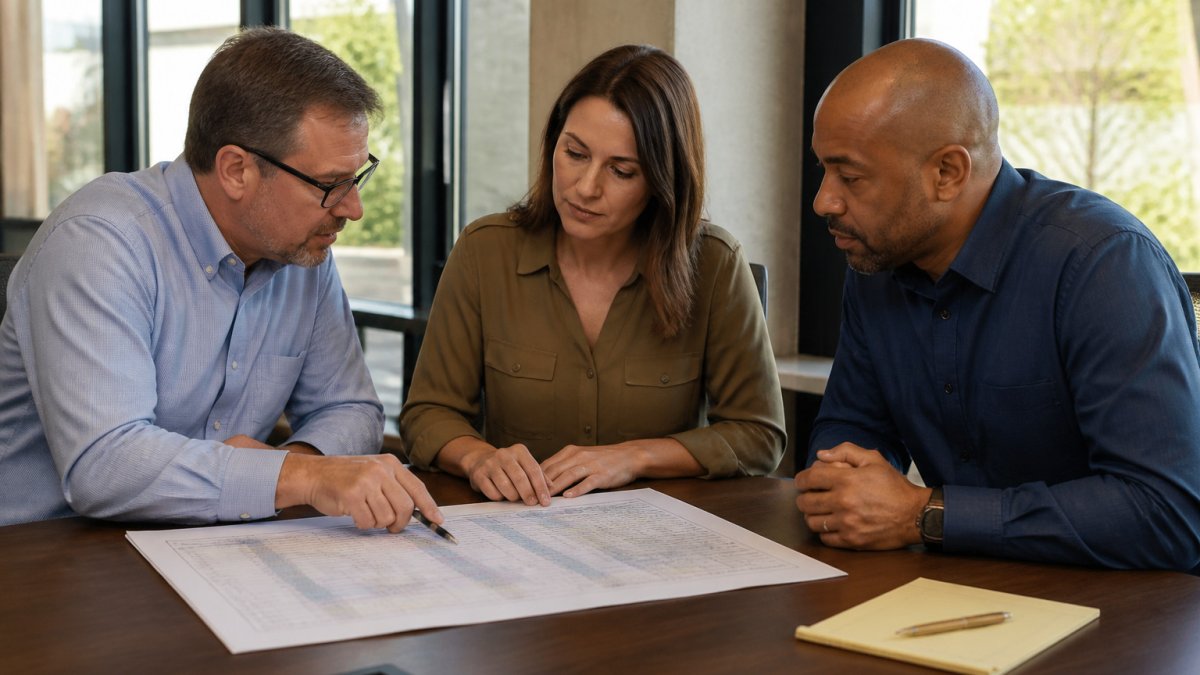
Build a simple table with tasks down the side and people across the top:
| Task | Owner | Reviewer | Due |
|---|---|---|---|
| Confirm scope and forms | Business development | Project manager | Day 2 |
| Draft technical approach | Lead engineer | Project manager | Day 6 |
| Prepare cost and rate sheets | Principal | Finance lead | Day 7 |
| Final assembly and portal upload | Coordinator | Principal | 24 hours before deadline |
Each task gets exactly one owner. A reviewer is a second check, not a co-owner. Put the matrix in the same place as your checklist so the whole team sees one set of responsibilities.
Step 4: Map the Public Works Proposal Timeline Backward From the Deadline
Planning forward from the notice date tends to underestimate how long each stage takes. Planning backward from the deadline makes the real schedule visible.
Start with the agency's response deadline, then subtract in this order:
- Final assembly and upload: allow a full day for portal issues and formatting
- Review and revision: build in at least one full review cycle
- Drafting: schedule the longest tasks first, usually the technical approach
- Questions and addenda: leave time to read and act on amendments
- Kickoff: the day the team commits to the bid
Check the official portal for amendments throughout this window. Addenda can change scope or dates, and a timeline built on the original notice alone can become outdated.
For example, a county roadway solicitation with a deadline three weeks out might show that the review cycle must start by about day 12 (illustrative only; your dates will differ). To plan this early, learn how to find upcoming county construction projects before a solicitation is posted.
Tracking Addenda, Clarifications and Planning Notices Without Losing Track
Once a solicitation is active, it generates a stream of updates: addenda, clarification answers and occasionally a revised deadline. Track each one in the same record as the original solicitation, with the date it was issued and who on the team reviewed it.
Keep planning notices in a separate status. A forecast tells you what an agency may solicit later. It is a reason to prepare, not a reason to write a proposal.
Here is what a clean record should show for each opportunity:
- Current status: open, forecast, closed or no-bid
- Latest addendum number and date reviewed
- Named owner for the next action
- The next deadline, with its source noted
Project Signals keeps official context, documents, deadlines and internal notes together for each opportunity. Even without a tool, the principle holds: one record per opportunity, updated on every change.
Booking Your Next Pursuit: Setting Up Your Workflow This Week
You do not need a perfect system to start. Set up the checklist, the bid/no-bid questions and the responsibility matrix this week, then run your next solicitation through them.
If you want to see how matched opportunities can feed this process, you can see how Project Signals qualifies public opportunities and decide whether it fits your team. For teams focused on planning and environmental work, a planning and environmental opportunities page shows the opportunity types to watch.
Review your workflow after every pursuit. Note what slowed you down and adjust the checklist. A workflow that gets used every time beats a detailed one that gets ignored.
Frequently Asked Questions
How should a small team organize a public works proposal?
Start with one shared record for each solicitation that holds the issuing agency, solicitation number, scope summary, submission method, and every deadline. Assign one owner for the overall pursuit, then give each discipline lead a named set of sections or exhibits. Hold a short check-in at fixed points, such as after the bid/no-bid decision and before the internal review. Keep all agency clarifications and addenda in that same record so the final package reflects the latest official instructions.
What should a contractor check before pursuing a public works solicitation?
Confirm that the notice is an open solicitation rather than a forecast or planning notice, and verify the closing date and time against the issuing agency's official posting. Check the required licenses, certifications, insurance, bonding, and prequalification, and confirm whether the work matches your delivery role as a prime or subcontractor. Note any site visit or pre-bid meeting requirements. Use the agency's own documents as the source of truth, and write down anything that is unclear so you can ask during the official question period.
What is the difference between a planning notice and an open solicitation?
A planning notice or forecast signals that an agency expects to procure work, often with no committed funding or fixed timeline. An open solicitation is a formal request with a set submission deadline and defined evaluation rules. Treat planning notices as early-warning items for pipeline tracking, and do not start a full proposal until an official solicitation is posted. Keep the two categories separate in your records so expired or unconfirmed items are not mistaken for open bids.
How can a small team manage proposal deadlines and responsibilities?
Map each deadline backward from the agency's submission time, then add internal milestones for drafting, subcontractor quotes, technical review, and final assembly. Record the owner for each milestone in a responsibility matrix, and set a buffer so the package is ready at least one business day before the posted deadline. Review the schedule at each check-in and update it when addenda change dates or requirements.
